
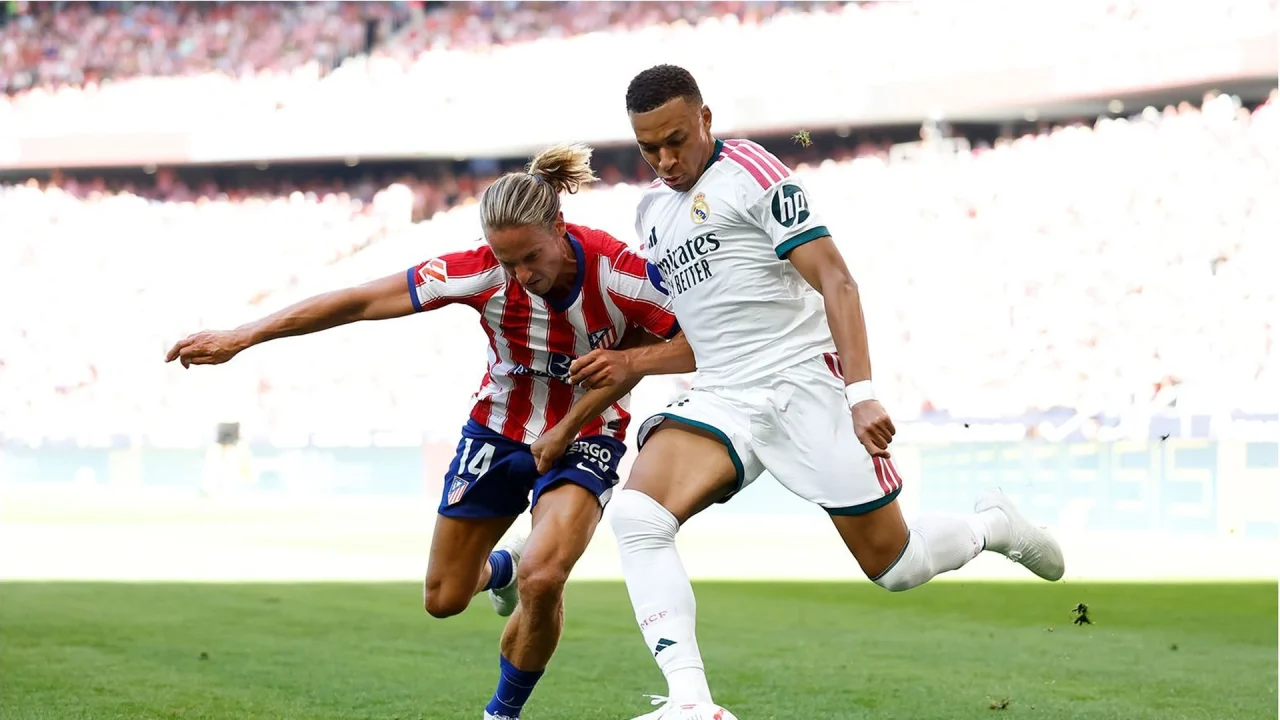
Atlético Madrid defeated Real Madrid 2-1 in the latest city derby. The match changed through Atlético’s ability to protect central space, attack after recoveries and preserve their lead without allowing Real Madrid to turn late possession into a clear equalising chance.
The first line directed play away from the centre
Atlético’s forwards did not need to win every ball; they needed to make the next pass predictable for the midfield behind them. Atlético’s first line succeeded by guiding Real Madrid away from central receivers. The forwards did not chase every defender; they curved their pressure so the next pass arrived in an area the midfield was prepared to contest.
That guidance reduced the number of times Real Madrid could receive between the lines while facing goal. The second goal changed the risk of every later action. Atlético could choose moments to counter without sending too many players, while Real Madrid had to increase numbers and accept more space behind the attack.
The winning attack used the space created by pressure
A recovery became dangerous because the first runner moved forward immediately and another option stretched the defensive line. A 2-1 score does not mean the home side controlled every minute. It does show that their compact structure survived periods without the ball and still produced enough attacking threat to prevent Real Madrid from advancing without caution.
The move was not simply a fast counterattack; it depended on a controlled first pass after possession changed. The decisive transition began with control rather than speed alone. Atlético secured the recovered ball, sent one runner forward and used another movement to stretch the final line before Real Madrid could restore its spacing.
Real Madrid still found periods of control
The visitors circulated the ball and moved their wide players into attacking positions, especially when Atlético defended deeper. Real Madrid still accumulated possession in advanced areas. The missing detail was a clean touch behind Atlético’s midfield, where a receiver could turn instead of playing another pass in front of a settled block.
Their difficulty was turning that field position into repeated clean touches inside the penalty area. The derby offers separate lessons. Atlético can carry the same pressure-and-recovery connection into future matches, while Real Madrid need more movement behind a settled defence rather than additional passes in front of it.
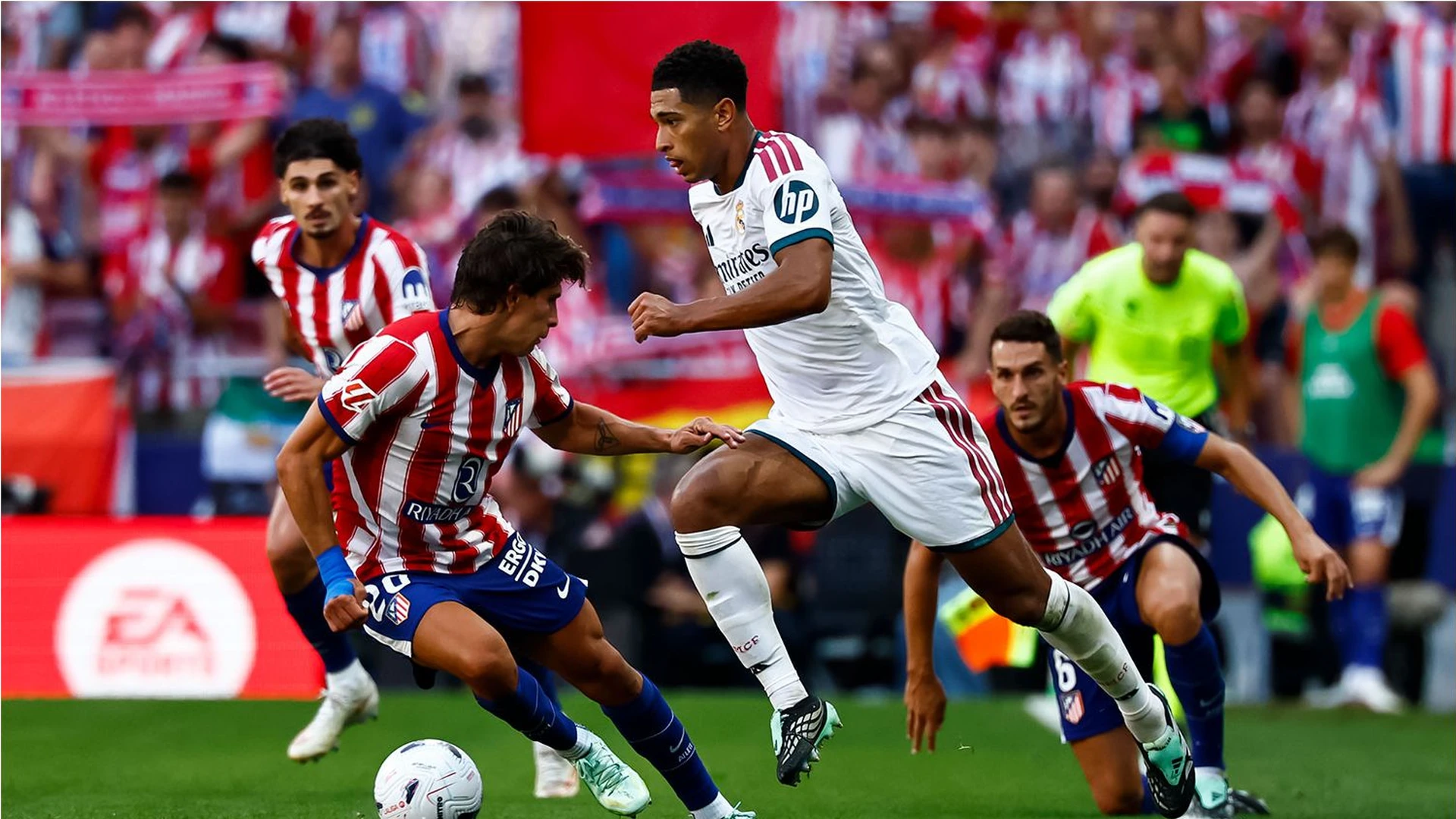
Atlético protected the final phase together
Midfielders tracked the cutback area while defenders dealt with the first run and goalkeeper space remained clear. Atlético’s midfield distances also protected the centre-backs from repeated one-against-one duels. When a player stepped forward, a team-mate narrowed the gap behind him instead of leaving the defensive line to solve the next pass alone.
A low block can become passive, but the home side continued to step toward the receiver when the pass entered a dangerous zone. When Atlético defended deeper, the nearest player continued to step toward the receiver. That movement prevented the low block from becoming a static line and bought time for the players behind him to protect the box.
The derby gives evidence beyond the score
Atlético showed that their compact shape can support fast attacks without abandoning the space in front of the centre-backs. The cutback zone was defended collectively. A centre-back followed the first run, a midfielder tracked the later arrival and the goalkeeper retained a clear view, reducing the value of Real Madrid’s wide progress.
Real Madrid’s next task is to create more movement behind a settled line rather than adding possession in front of it. Real Madrid’s best moments came when the ball moved quickly enough to shift that cover. The sequence became less dangerous whenever an extra touch allowed Atlético to return to the compact positions that had already closed the centre.
Comments
No comments yet — be the first to share your thoughts.