






































































































England earned their first points of the new Nations League campaign by beating Czechia 2-0 away from home. The response mattered after the 3-2 opening loss to Spain: this time the visitors paired two goals with a clean sheet and did not allow the match to become another exchange of attacks. Czechia have now lost both of their first two Group A3 fixtures, each by a two-goal margin across the final score.
England avoided another match built around a comeback
England’s opening match became a five-goal contest against Spain, a shape that left every possession carrying immediate danger. In Czechia, the stronger route was to control where the next attack began. Keeping the ball after an advance, protecting the central space and resetting through the defense reduced the number of transitions that could pull the team apart.
An away match does not require constant retreat, but it does punish careless spacing. When a full-back moves high, the nearest midfielder must be able to delay a counter and the opposite side must narrow. England’s clean sheet indicates that the attacking structure did not leave an obvious route back through the middle. The two goals then had a stable platform instead of serving as temporary leads in an open game.
Czechia needed support after direct passes
The hosts entered the fixture after a 2-1 defeat to Croatia, so their need for points was clear. Direct passes and second balls can move a game toward the opponent’s penalty area quickly, but territory only becomes pressure when the next touch is supported. An isolated forward receiving with his back to goal gives the defense time to recover its line.
The useful alternative is to place one runner beyond the target and another underneath him. That creates a choice after the first duel: turn the defense with a flick, or secure possession and attack the next space. Without that second layer, repeated long deliveries look urgent but ask the same question. England could prepare for it, win the first or second contact and move the match away from their box.
A two-goal lead changed England’s passing priorities
Once the margin reached two, the visitors no longer needed every recovery to become a fast break. A safe pass across midfield could remove Czech pressure and make the hosts run again. The key was not simply lowering the tempo; it was choosing moments when a third goal was available without turning a settled match into a sequence of equal-number counters.
Possession near the touchline can be especially useful in that state. It stretches the defending block but keeps a lost ball away from the most direct route to goal. If Czechia pressed with extra numbers, a switch could find the far side. If they remained compact, England could recycle and allow the clock to move without surrendering control.
| Group A3 team | Matchday 1 | Matchday 2 |
|---|---|---|
| Czechia | Lost 1-2 to Croatia | Lost 0-2 to England |
| England | Lost 2-3 to Spain | Won 2-0 at Czechia |
| Spain | Won 3-2 at England | Won 4-1 against Croatia |
| Croatia | Won 2-1 at Czechia | Lost 1-4 at Spain |
The clean sheet gives England a defensive model to repeat
A result without conceding does not mean every duel was perfect. It shows that mistakes did not combine into a decisive chance. The goalkeeper, central defenders and screening midfielders can review the match as a connected unit: who stepped, who covered the space behind, and whether the weak-side runner was passed on early enough.
That review is more useful than treating the zero as proof that no changes are required. Stronger opponents will move the ball faster and use rotations that pull one marker away from the line. England can preserve the same distances while improving the speed of communication. The objective is to reproduce the structure, not to assume the score will reproduce itself.
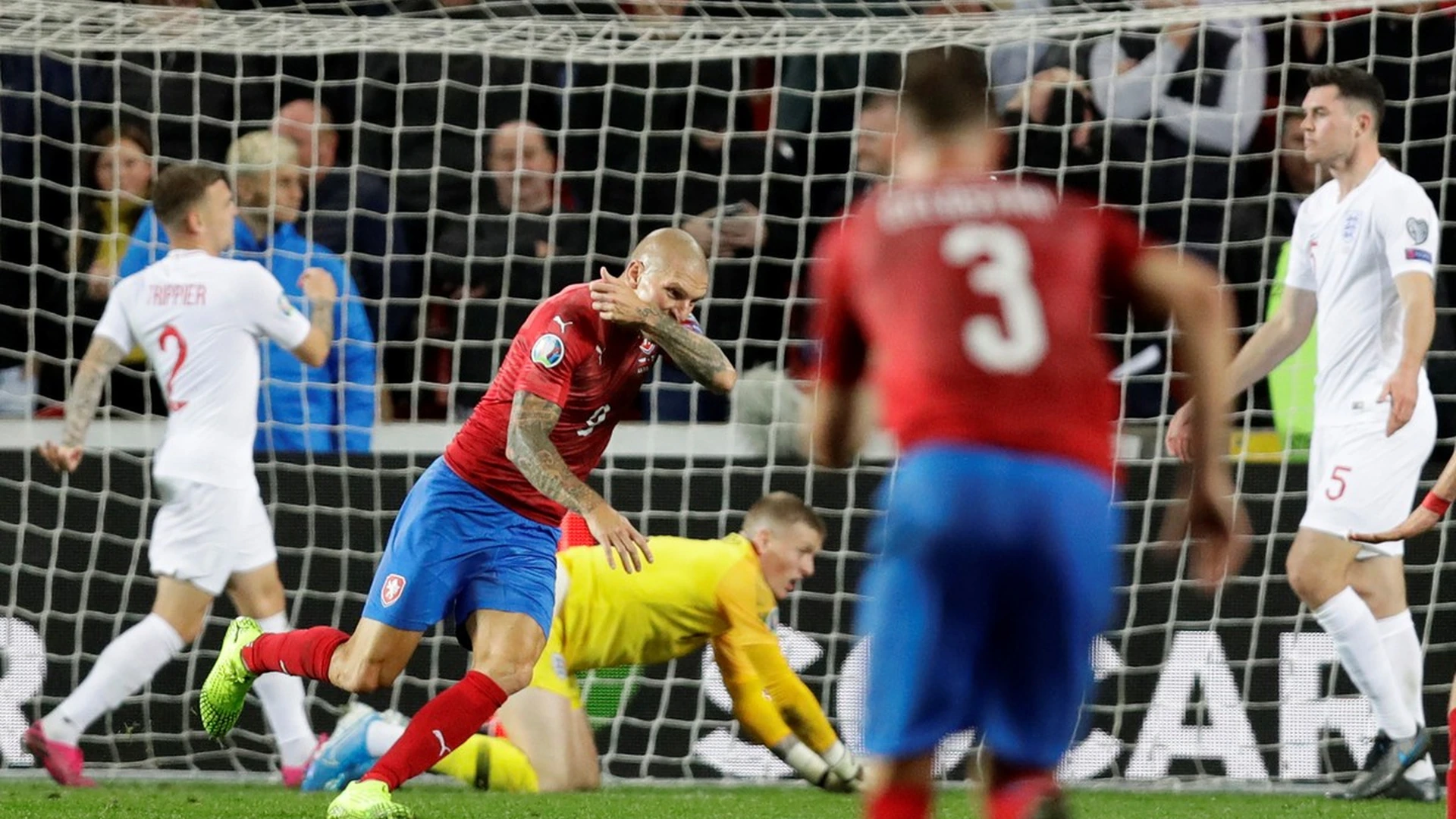
Czechia’s next improvement begins after regaining the ball
When a team spends time defending, the first pass after a recovery determines whether the block can move out. A rushed vertical ball may return immediately, leaving the same players to defend another wave. Czechia need a reliable outlet who can receive under pressure and connect to a runner before England’s rest defense closes around the ball.
That outlet does not always need to be the centre-forward. A midfielder moving toward the flank can open a diagonal lane and allow the nearest defender to step forward. The first secure connection gives the entire side time to leave its penalty area. Without it, even a successful tackle becomes only a brief interruption in the opponent’s possession.
Group A3 now has an early separation
Spain have two wins, while England have recovered from their opening defeat. Croatia and Czechia have each faced difficult starts, but only two rounds have been completed. The schedule creates quick corrections: tactical lessons cannot remain in the analysis room because the next international window asks teams to apply them against the same group rivals.
For England, the 2-0 win restores points and goal difference without pretending the Spain defeat did not happen. For Czechia, two competitive losses show that small periods of control must become goals before the opponent settles. The table is beginning to take shape, but the more important evidence is how each team manages the phase after possession changes hands.



Comments
No comments yet — be the first to share your thoughts.