
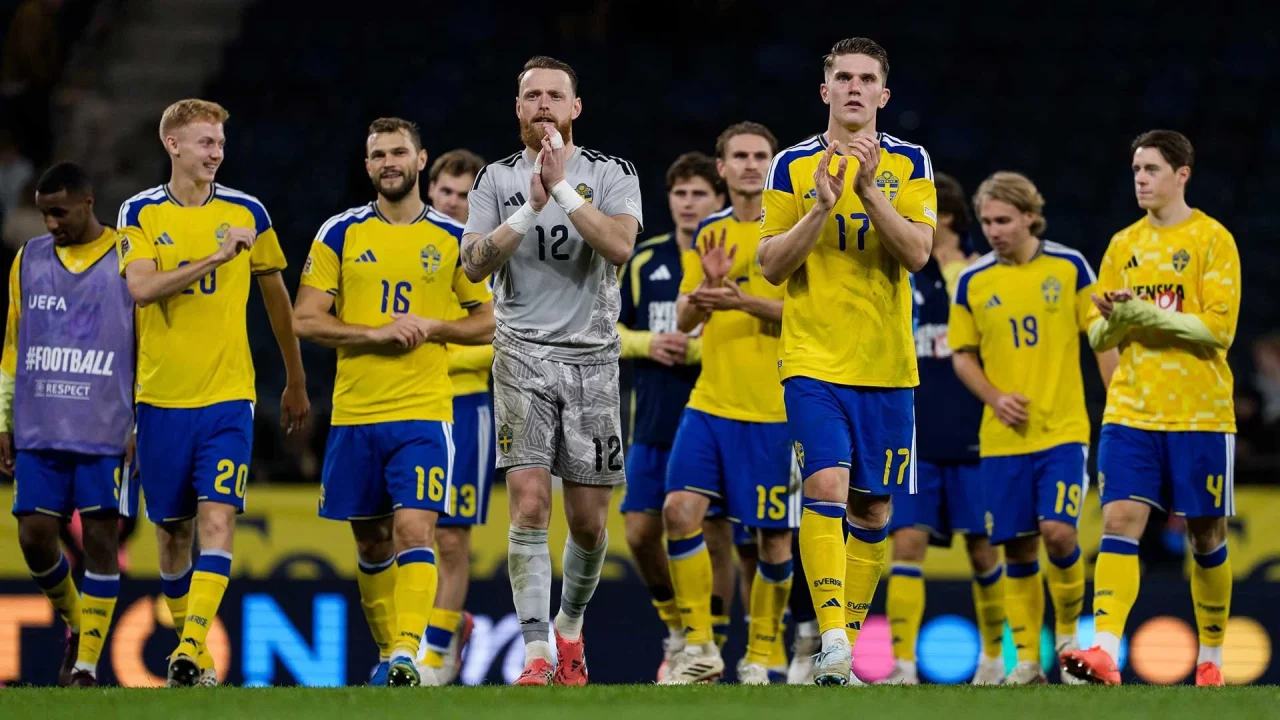
Sweden defeated Poland 3-1 in the Nations League with goals from Benjamin Nygren, Hugo Larsson and Viktor Gyökeres. Sebastian Szymański had levelled the match for Poland, but the hosts regained control after the interval and converted their territorial advantage. Sweden finished the opening window with six points, while Poland remained on one. The gap came from Sweden’s ability to keep attacks connected after the first cross or shot was stopped.
Nygren’s opener rewarded Sweden’s use of the flanks
Sweden used the outside channels to move Poland’s defensive line and create room for runners arriving inside. The opening goal was a product of that intent rather than a hopeful sequence from deep. Nygren found a position from which the next touch could threaten goal, while teammates occupied enough defenders to prevent an immediate double team.
The hosts’ width also improved their counterpress. When an attack broke down, players were already placed around the ball and could delay Poland’s first pass. That kept the visitors defending for another phase. A single cross may be cleared, but the second attack becomes dangerous when the clearance returns to a Swedish player with the whole team still facing forward.
Szymański’s equaliser showed Poland’s threat between pressure waves
Poland did not need long spells of possession to create a meaningful response. Szymański recognised a moment when Sweden’s structure was expanding and used the available space decisively. The equaliser proved that the visitors could punish an imprecise recovery position, and it prevented the first half from becoming a comfortable Swedish exercise.
The goal also gave Poland a template that was not reproduced often enough. The first forward action needed support close enough to combine before Sweden recovered. When the receiver became isolated, the hosts could slow the counter and rebuild their block. More synchronized movement from midfield would have turned occasional danger into a sustained problem.
Sweden restored control instead of chasing the score emotionally
After conceding, the hosts did not turn every possession into an immediate vertical pass. They returned to the spacing that had created the opener, moved Poland laterally and waited for the next useful opening. This prevented the equaliser from changing the match into an exchange of unsupported attacks.
Control did not mean sterile possession. Sweden continued to place runners around the area and attack rebounds. The difference was that those players arrived as part of the move rather than abandoning their positions in advance. Poland therefore faced repeated pressure while finding fewer clean opportunities to counter.
| Item | Detail |
|---|---|
| Result | Sweden 3-1 Poland |
| Sweden scorers | Benjamin Nygren, Hugo Larsson, Viktor Gyökeres |
| Poland scorer | Sebastian Szymański |
| Points after two matches | Sweden 6, Poland 1 |
Larsson’s goal made the midfield advantage visible
Hugo Larsson’s contribution reflected the hosts’ ability to arrive from behind the first attacking line. A midfielder entering at the correct moment is difficult to pass between defenders because responsibility changes during the run. Poland’s back line had to watch the striker and wide threat, while the midfield was already occupied by Sweden’s circulation.
The finish rewarded timing rather than permanent occupation of the box. If Larsson had stood beside the forwards throughout the move, a defender could have marked him earlier and Sweden would have lost support outside the area. Arriving late preserved both functions: he helped the team control the build-up and still became a direct scoring threat.
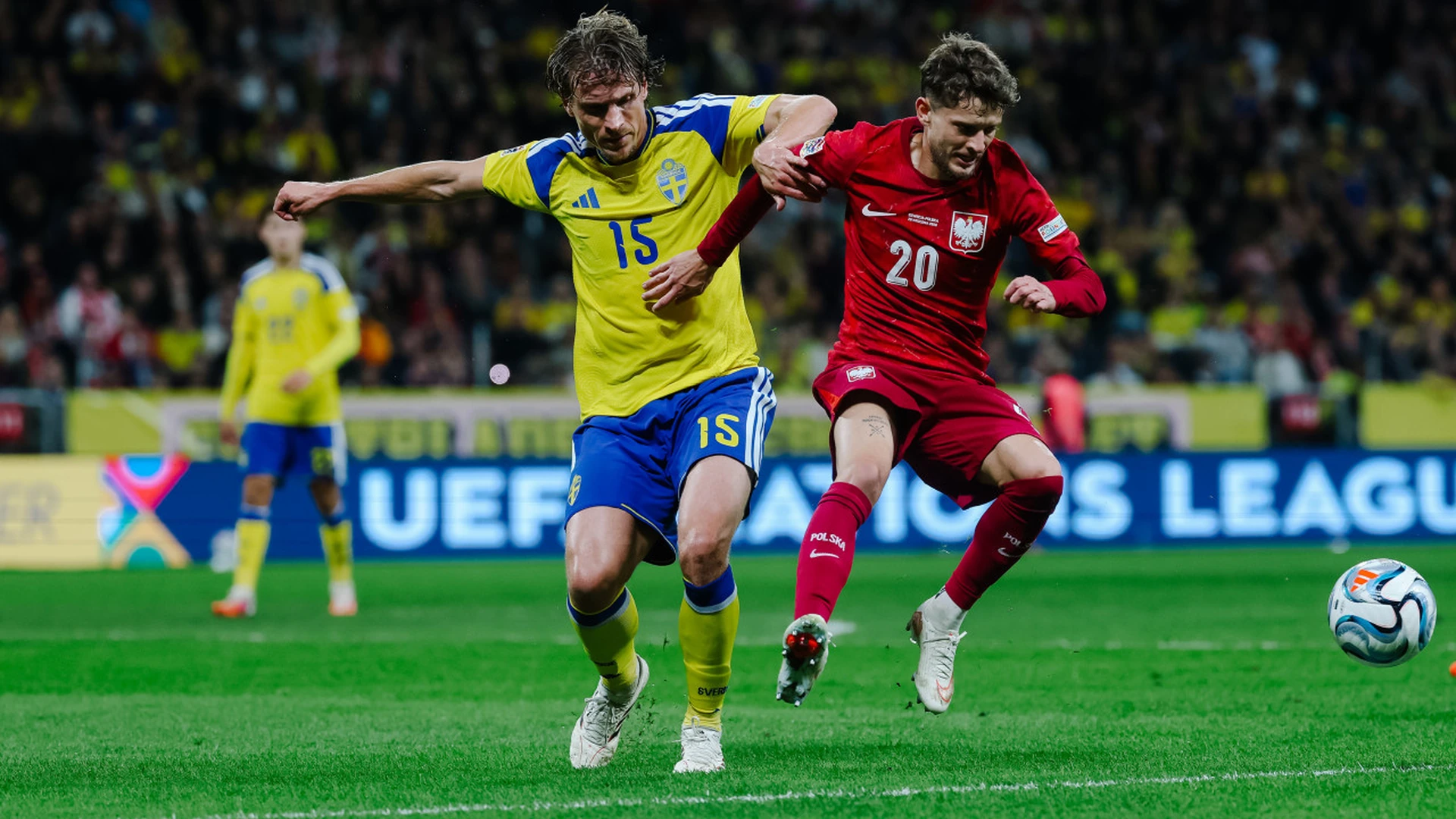
Gyökeres converted the advantage into a secure margin
A centre-forward’s work is not limited to the final touch. Gyökeres occupied the central defenders, provided an outlet when Sweden needed to escape pressure and attacked the area when the hosts moved wide. His goal completed the 3-1 score and removed the possibility that one Polish set piece could change the result.
The margin also allowed Sweden to manage the final minutes with greater clarity. They could protect central spaces, choose safer moments to advance and make Poland travel farther for every recovery. The third goal therefore mattered beyond the scoreboard. It changed the risk calculation for both teams and turned the closing phase into controlled game management.
Six points confirm a strong window without ending the work
Sweden’s perfect return from the opening matches reflects a team able to create through several roles. Nygren supplied the first goal, Larsson arrived from midfield and Gyökeres finished as the central reference. That variety makes it harder for future opponents to build one defensive plan around removing a single player.
Poland’s one point does not erase the quality of Szymański’s equaliser, but it shows the need to connect those moments. The visitors must protect second balls after defending wide attacks and support the first counterattacking receiver more quickly. Sweden earned the 3-1 victory because their pressure survived individual actions; Poland’s best attacks too often ended after one.


Comments
No comments yet — be the first to share your thoughts.