
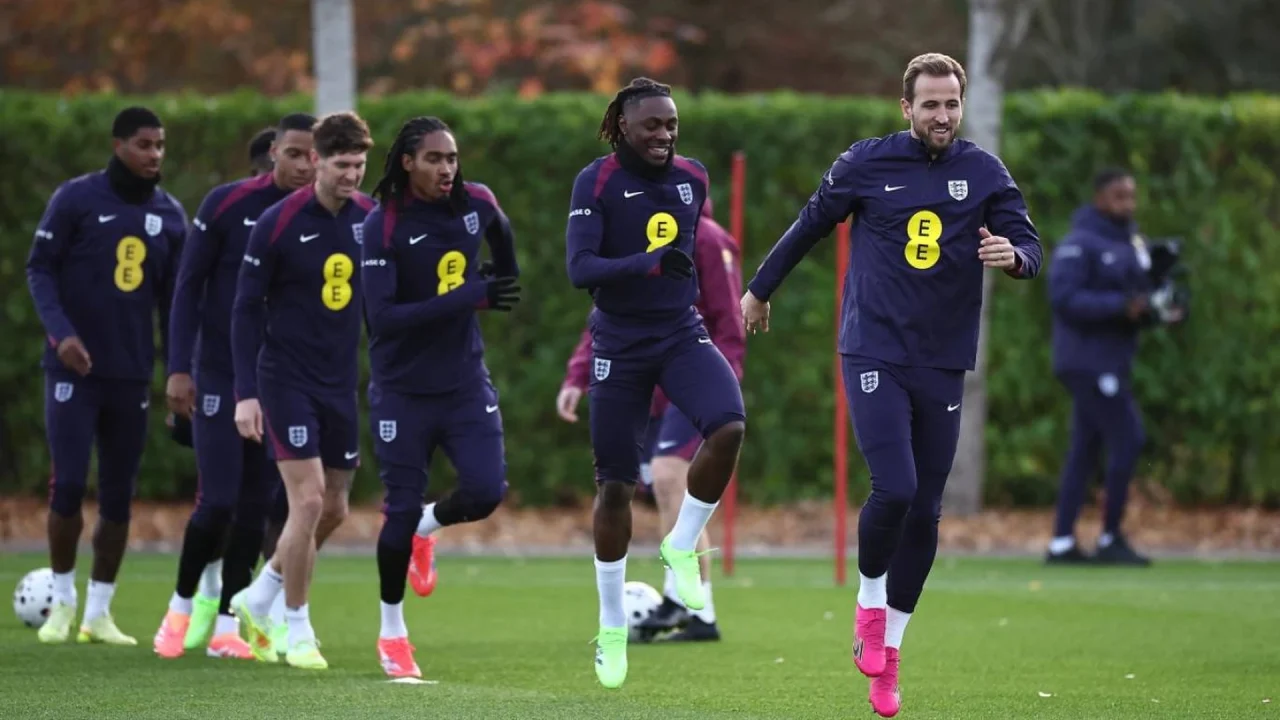
England host Spain at Wembley on September 26 at 19:45 BST in the opening round of their Nations League group. Spain arrive as world champions, while England begin a six-match section that also includes Croatia and Czechia.
England need an organised first press
The nearest forward must close one route while the midfield protects the pass behind him. England’s first presser must close a passing lane as well as approach the ball. If he runs straight at the centre-back, Spain can use one short pass behind him and immediately face an exposed midfield. A calm opening does not mean a passive one. Both teams can gather information through the first possessions, then increase the tempo when the location of the spare player and the weak defensive lane become clear.
Running at Spain’s defenders without cover would allow one short combination to remove several English players. Set pieces give England a controlled way to use height and delivery. Spain’s answer begins with the first contact, yet the positioning for the second ball can be equally important if the original cross is only partly cleared.
Spain can control the ball without rushing
Their midfielders are comfortable repeating short passes until a winger receives with room to face the defence. The group schedule adds value to a stable opening performance. Croatia and Czechia will pose different questions later, so neither side needs to force the entire campaign into one early attacking decision.
Possession becomes less safe when England force play toward the touchline and close the return pass. Spain are comfortable repeating possession until a winger receives with room. England can reduce that patience by guiding play toward the touchline, where the sideline removes one option and the return pass can be pressed together.
Wembley can support a direct attacking phase
A recovered ball can quickly reach an English runner before Spain restore their usual distances. A recovered ball gives England a short chance to attack before Spain restore their distances. The first pass must find a runner or secure receiver; a blind clearance only starts another Spanish possession with England deeper than before.
The first pass still needs accuracy because a rushed clearance only returns the ball to the visitors. The strongest evidence will be England’s response to a long Spanish possession. Keeping compact distances without abandoning the counterattacking outlet would show that patience and ambition can exist in the same plan.
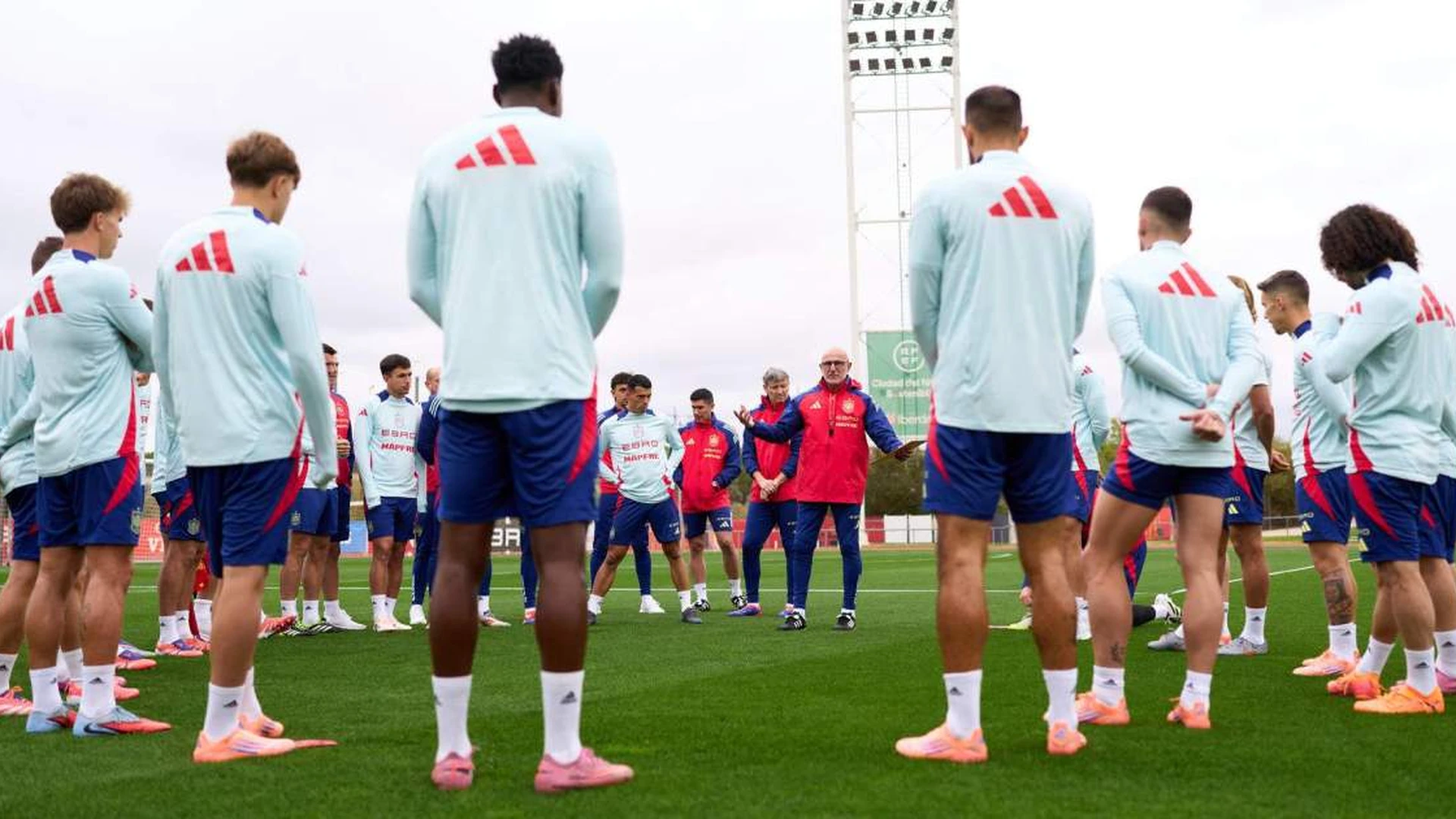
The penalty areas will test different strengths
England can threaten through crosses and physical runs, while Spain often create a cutback after moving the defence toward the byline. England’s wide defender needs support before stepping toward the Spanish winger. If the nearest midfielder arrives late, the winger can combine inside and turn an apparently safe touchline position into a central overload.
Defenders must track the second movement instead of focusing only on the first player near the ball. The penalty areas present different patterns. England can bring physical runs toward a cross, while Spain often reach the byline and return the ball toward a late arrival who is harder for defenders to see.
The group does not allow a passive opening
Croatia and Czechia provide different problems later, so both teams will want a usable performance as well as the first result. Wembley can support an aggressive phase, but the defensive line must move with the midfield. A forward sprint without the next line of pressure simply increases the space in which Spain can turn and select the next pass.
A disciplined draw may have value, but neither side can plan around the score before the match develops. Spain must also protect the ball after a cutback is cleared. Their midfield position at the edge of the attack can either recover the second ball or leave England with the direct route that the home side has been waiting to use.


Comments
No comments yet — be the first to share your thoughts.