




















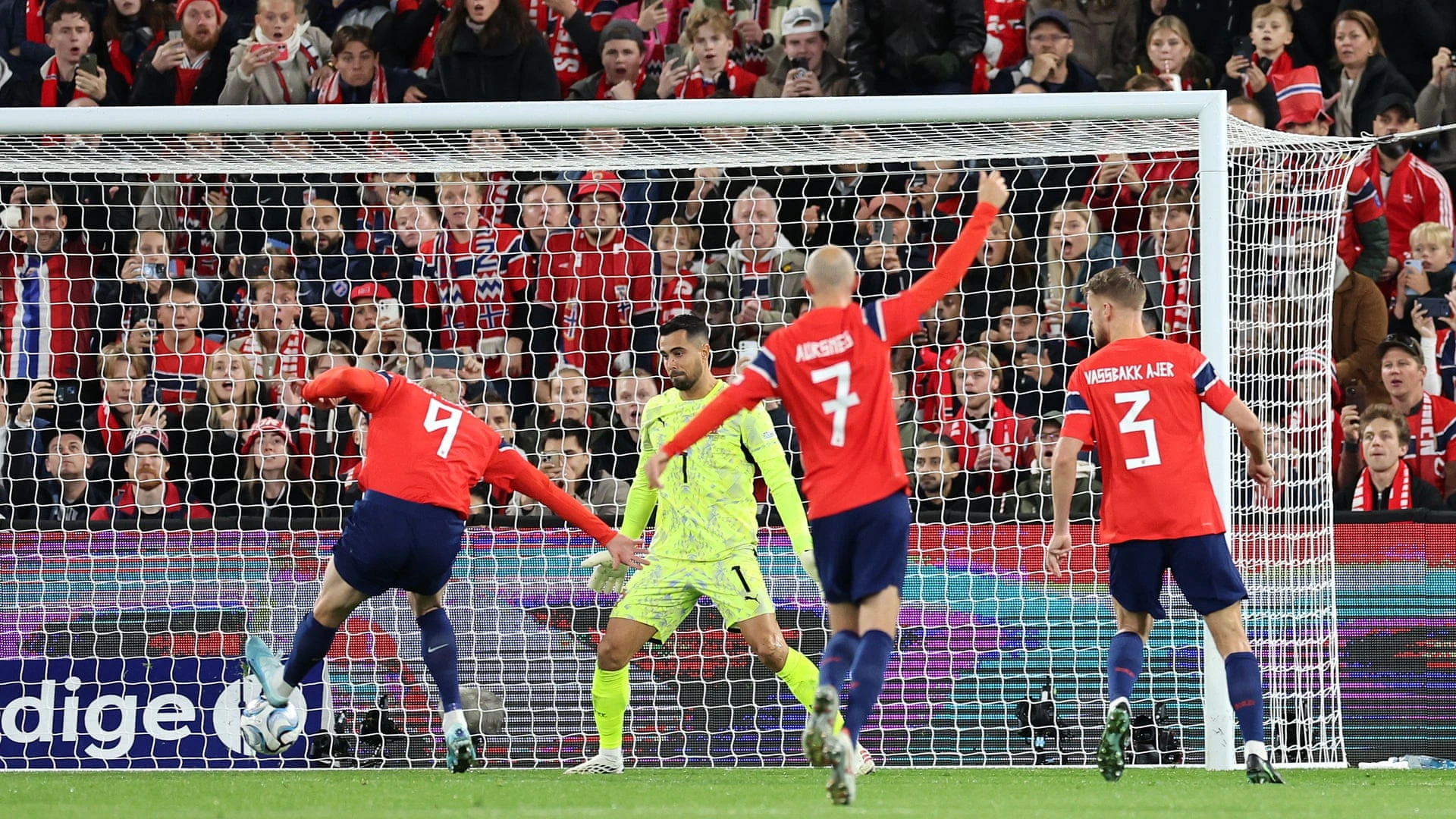
Portugal beat Norway 2-1 in the UEFA Nations League after Gonçalo Ramos punished a mistake by goalkeeper Ørjan Nyland. João Félix opened the scoring in the first half. Erling Haaland equalised after the interval from the rebound to Martin Ødegaard’s free kick, but Ramos intercepted Nyland and lifted the ball into the unguarded goal from outside the penalty area.
João Félix gave Portugal an early lead
Portugal went ahead in the seventeenth minute through João Félix. The goal allowed the visitors to choose their moments instead of attacking at the same speed on every possession. Norway had to move players out of its compact defensive formation, creating lanes for Portugal to pass around the forwards and find a free player between midfield and defence.
The lead did not remove Norway’s main threat. Haaland remained capable of attacking the space behind the centre-backs, while Ødegaard could find him with an early pass or a set piece. Portugal therefore needed the ball not only to create a second goal but also to prevent Norway from beginning repeated direct attacks.
Diogo Costa denied Haaland before the equaliser
The Portuguese goalkeeper stopped Haaland twice during a period when Norway found clearer access. Those saves gave his team time to repair the distance between midfield and defence. Facing Haaland is not only a test of reaction speed. Costa had to hold his starting position long enough to avoid opening a simple finish, then close the angle when the striker committed.
A goalkeeper cannot remove every second ball, and Norway eventually used one after the break. Ødegaard’s free kick was not completely cleared from danger, and Haaland converted the rebound. The move showed why the first save or block must be supported. Portugal defended the initial action but did not own the next touch.
Haaland’s equaliser gave Norway momentum
At 1-1, the home side had a chance to use the crowd and push Portugal into a hurried response. The danger for the visitors was to send too many players forward immediately and offer Haaland an open field. Portugal instead continued to press selected moments, especially when the ball returned toward Nyland and the goalkeeper had limited forward options.
That pressure did not require a constant sprint. The first attacker closed the safe pass, while the next player waited for the hurried touch. A pressing trap is most effective when the opponent believes one outlet is available. Ramos read the next action and moved before Nyland could reset the attack.
| Phase | Key action |
|---|---|
| Opening goal | João Félix |
| Norway response | Erling Haaland |
| Winner | Gonçalo Ramos |
| Final score | Norway 1-2 Portugal |
Ramos turned an interception into the winning goal
Ramos won the ball from Nyland and recognised that the goal was exposed. His lob from outside the area needed enough height to clear the recovering players and enough control to drop before the bar. Taking another touch might have improved the angle but would also have allowed the goalkeeper to retreat. He used the few seconds available before the goal was protected again.
The goal was both a technical action and a pressing reward. Ramos did not receive a normal assist; he created the chance by anticipating the risky build-up. Norway wanted to keep possession after equalising, but a single poor connection near its own goal carried more danger than a clearance into midfield would have done.
A late shot against the crossbar kept Norway in the match
Rafael Leão later saw a deflected effort strike the crossbar, so Portugal did not secure a wider margin. Norway remained within one action of another equaliser. The visitors had to manage the final minutes without allowing the missed chance to change their concentration. Holding the ball in useful areas became more important than forcing a third goal from an unstable attack.
Portugal’s victory came from three different contributions: Félix established the lead, Costa protected it during Norway’s strongest spell and Ramos responded after it disappeared. Norway showed that its set pieces and central creators can reach Haaland, but the decisive mistake came in its own build-up. The next improvement is to recognise when playing short has stopped being the safer choice.
Ramos first noticed the open goal and then executed the lob
Goncalo Ramos’s long lob will be remembered for its execution, but the first skill was noticing the goalkeeper’s position before controlling the ball. A player who looks only at the ball sees the chance too late. Portugal kept enough players near the loose ball for the striker to attack the open goal instead of first waiting for support.
Norway’s equaliser through Erling Haaland had shown a direct route back into the match. After conceding again, however, the team could not create the same quality of service. The review should separate the successful movement around Haaland from the later attempts that arrived under heavier pressure. Repeating the useful support positions will offer more than simply increasing the number of crosses.
Comments
No comments yet — be the first to share your thoughts.