






























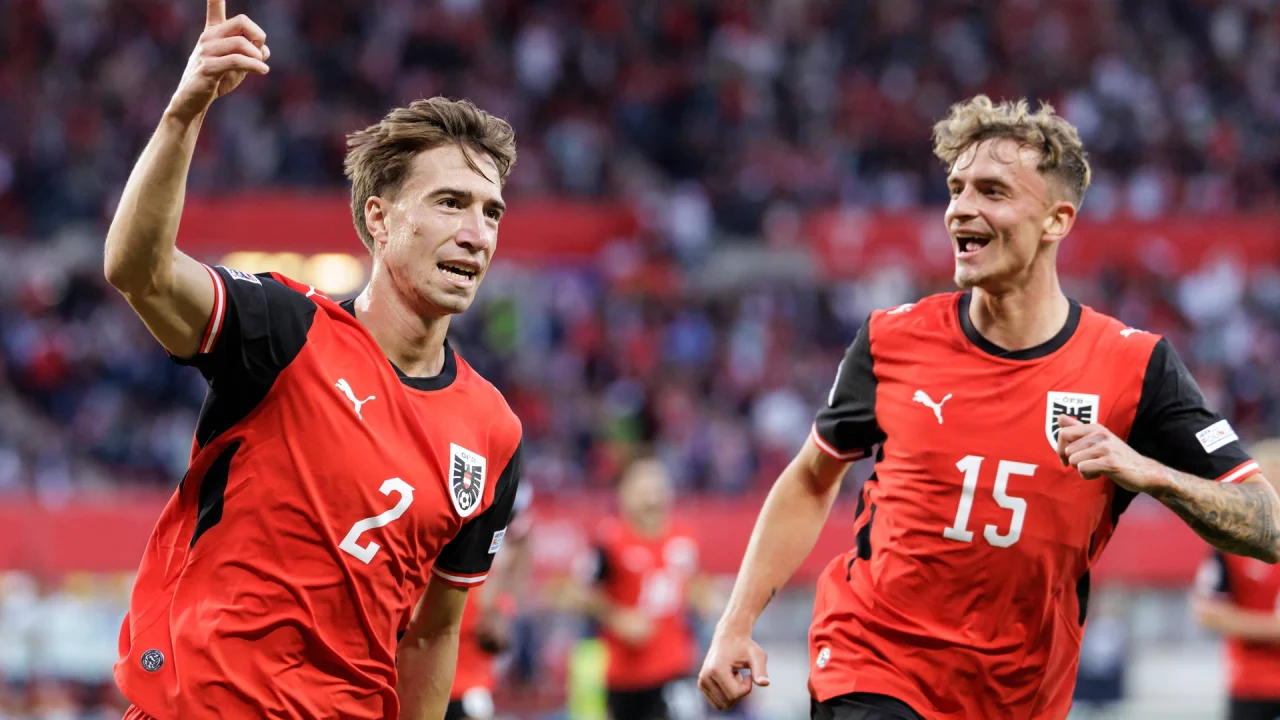
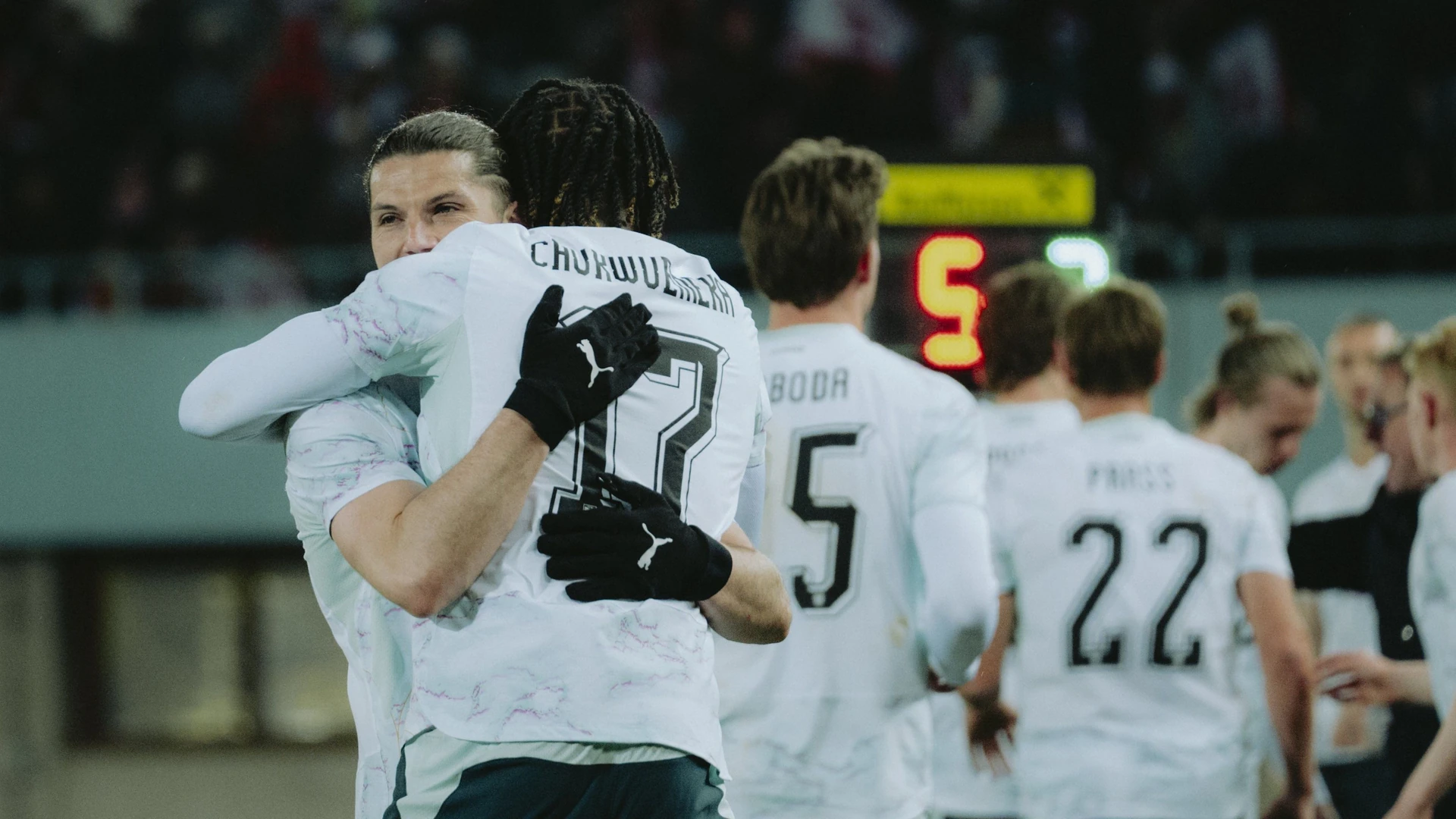
Austria beat Kosovo 3-1 to maintain a perfect start and first place in Nations League Group B3. Kosovo kept the match competitive, but Austria preserved enough control to protect their advantage. Substitute Carney Chukwuemeka added the goal that settled the contest and gave the final score a clearer margin.
Austria closed the central passing lanes
The group leaders protected the space in front of their central defenders and forced Kosovo to build around the outside. That did not stop every attack, but it reduced the number of possessions that began with an unopposed forward pass between the lines. Kosovo often had to receive facing the touchline instead of turning toward goal.
Austria’s midfield could then press with the sideline acting as an extra boundary. The nearest player challenged the ball, while the next covered the return pass. This arrangement kept the team compact and allowed a defender to remain spare. It was a controlled way to defend without dropping the whole side onto the edge of the penalty area.
Kosovo threatened after beating Austria’s first press
The 3-1 score should not be read as a match with no resistance. Kosovo could threaten when a midfielder escaped the first challenge and carried the ball toward Austria’s back line. Those moments forced the home side to retreat together instead of continuing an individual press that had already been beaten.
A team leading the group must recognise this change quickly. The first failed pressure is not an invitation for a second defender to leave position. Austria’s better sequences came when the midfield recovered behind the ball and made Kosovo complete another pass before reaching the penalty area.
Chukwuemeka added fresh movement from the bench
Chukwuemeka entered and later scored the goal that made the result secure. A substitute can exploit a defence that has spent the match following the same movements. His fresher acceleration and willingness to enter the scoring area changed the picture for defenders already concerned with the original attacking line.
The value of the substitution also depended on the team keeping its positions before he arrived. A fresh attacker is less useful if the match has become a sequence of clearances and isolated counters. Austria still had enough possession and field position to use his movement, turning the substitution into a tactical advantage rather than a late gamble.
| Item | Detail |
|---|---|
| Result | Austria 3-1 Kosovo |
| Group | B3 |
| Austria status | Perfect start, first place |
| Substitute scorer | Carney Chukwuemeka |
Austria kept possession after taking a two-goal lead
Once Austria led by two, the safest route was not to retreat without the ball for the remaining minutes. The hosts continued to offer short passing options and made Kosovo work to regain possession. Every controlled sequence removed time and reduced the number of direct balls that the defenders had to face.
Kosovo needed faster attacks but could not ignore the space left behind. Sending both full-backs forward might create one extra crossing position, yet it also gives Austria a simple route into the corners. The final phase therefore remained a balance between chasing the match and preventing the margin from becoming larger.
Austria protected their perfect start with a compact midfield
Austria’s place at the top of Group B3 is supported by results, but the useful evidence lies in how those results were protected. Compact spacing, pressure toward the sideline and a productive substitute can be repeated against different opponents. They do not depend on a single spectacular action.
Kosovo should preserve the forward dribbles that broke the first line and improve the support after them. The player with the ball often needs one nearby passing option and one teammate running behind the defence. Without both, Austria can delay the attack and recover. The 3-1 outcome confirms the leaders’ efficiency while showing Kosovo where its promising attacks lost momentum.
Austria’s next opponents will prepare for the group leaders
Winning the opening matches gives Austria control of its group position, but it also changes how opponents approach the next meeting. Kosovo’s resistance showed that the leaders cannot expect early space simply because previous results were strong. Austria must keep moving the defensive line until an attacker such as Chukwuemeka can run into a gap instead of receiving with his back to goal.
Kosovo can take a useful defensive lesson from the contest. The block survived many routine phases and forced Austria to remain patient. The decisive moment came when one line lost contact with the next. Correcting that distance is more realistic than rebuilding the entire plan. A compact team that also finds one reliable outlet after recovery can turn future narrow defeats into points.


Comments
No comments yet — be the first to share your thoughts.