





































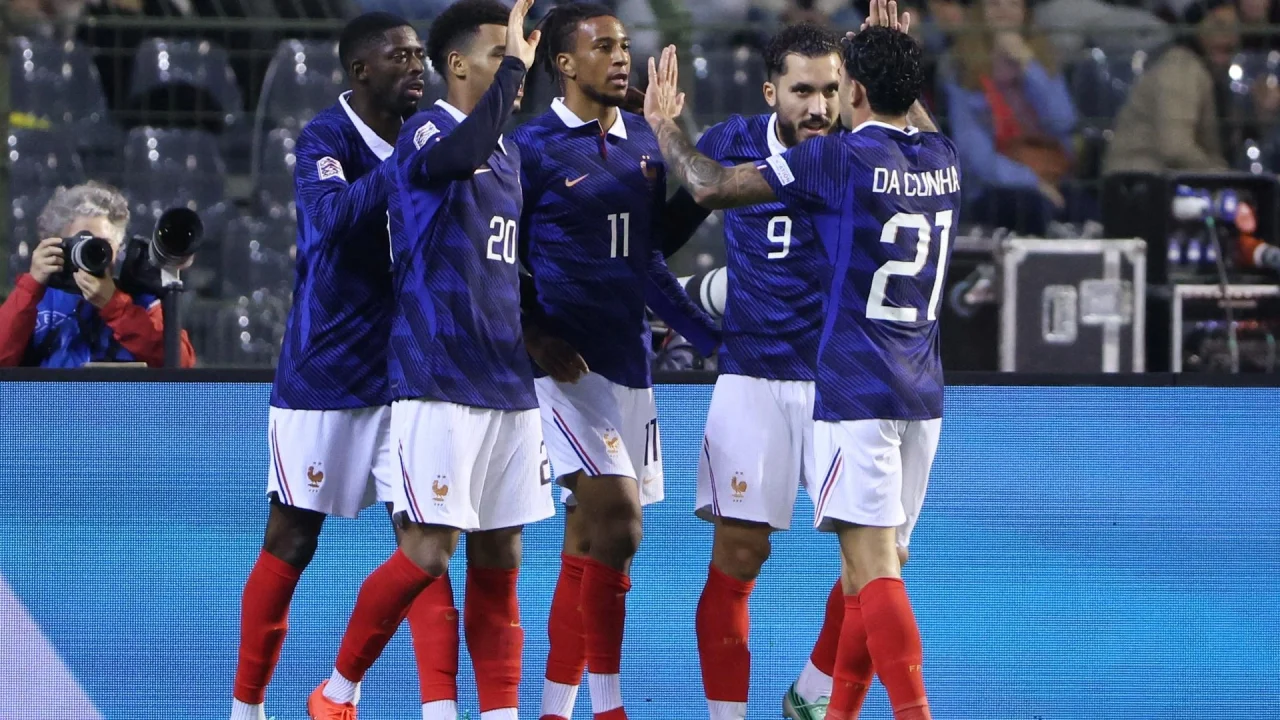
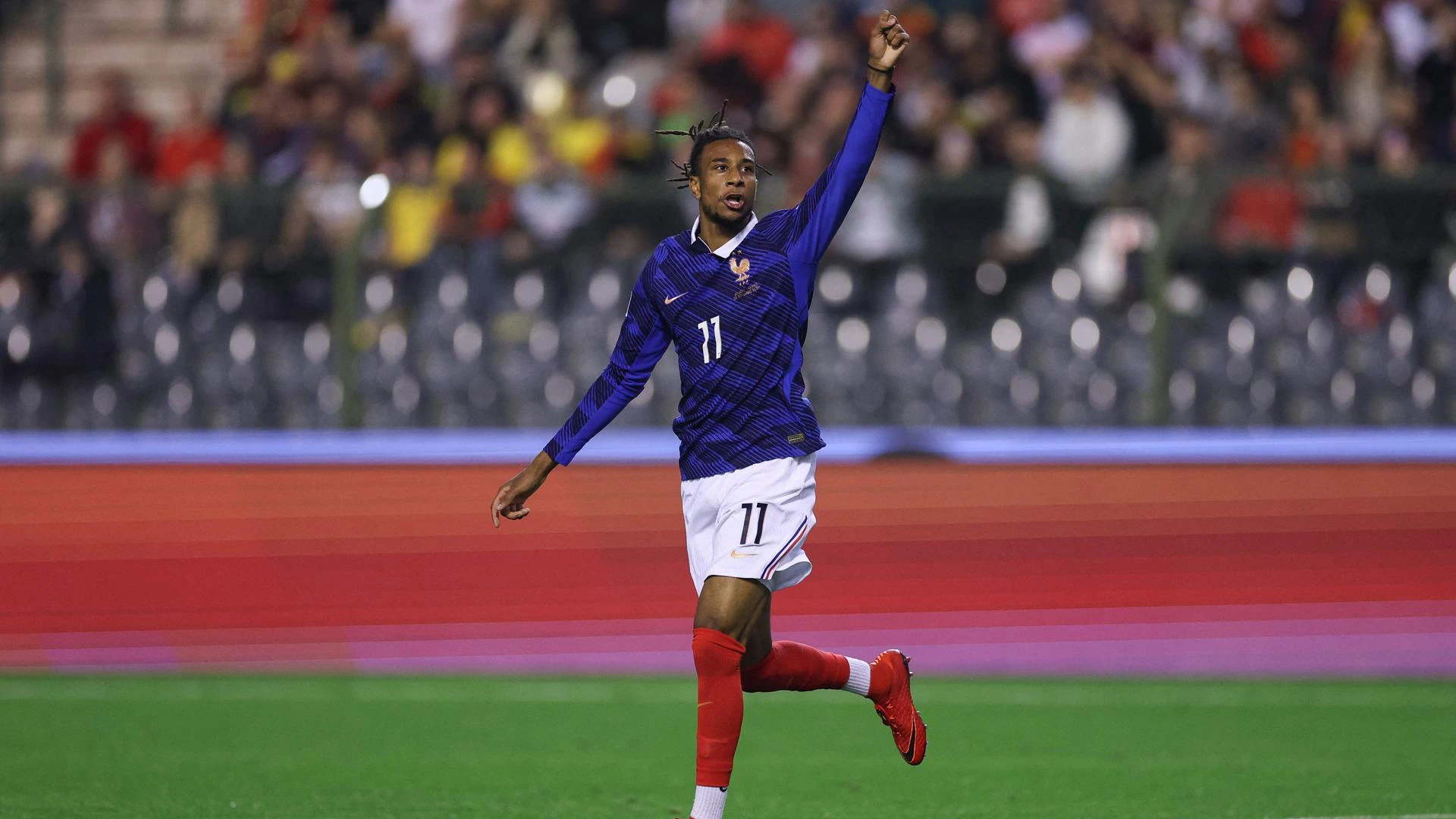
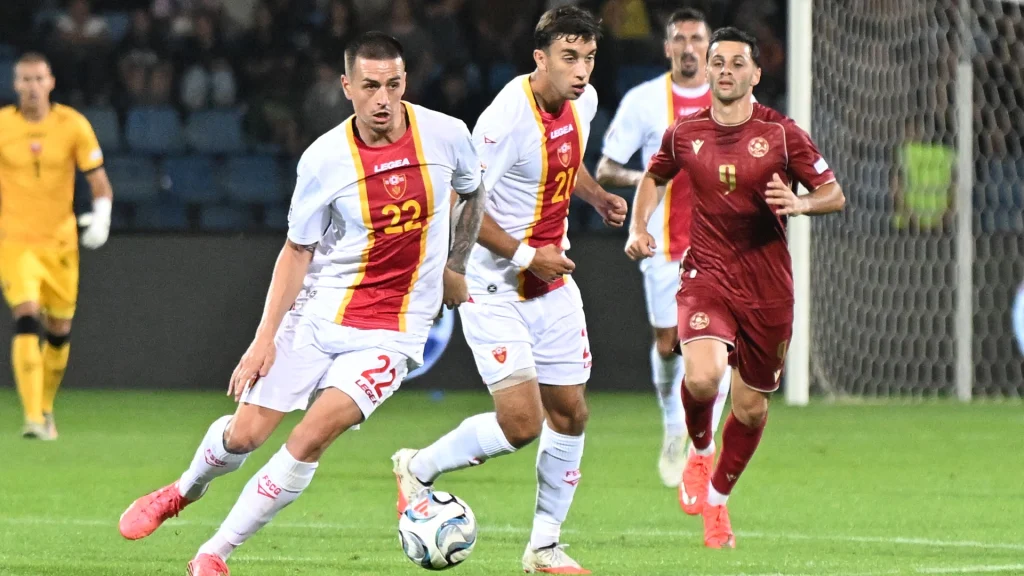
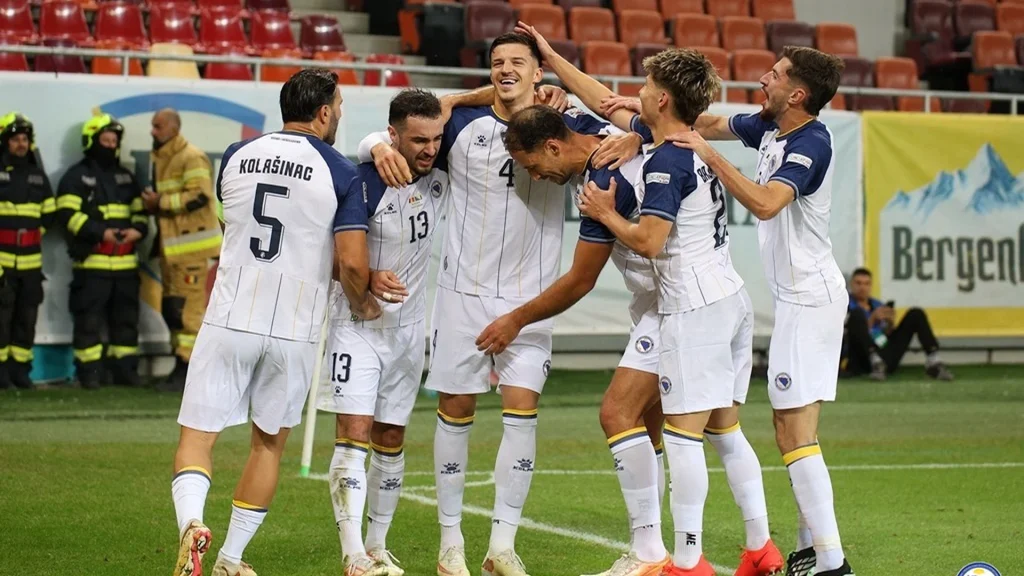
France left Belgium with a 1-0 Nations League victory after Michael Olise broke the deadlock in the 88th minute. His direct run and composed finish decided a match that had remained open without producing an earlier goal. Désiré Doué had struck the crossbar for France, while Lucas Da Cunha hit the post and Dodi Lukebakio went close for Belgium. The narrow score reflected the finishing margin rather than a lack of attacking intent.
Belgium’s compact shape kept the central route crowded
Belgium protected the area in front of the centre-backs and asked France to build around the outside. That reduced the number of clean passes into a striker with room to turn. France could move the ball into advanced positions, but the next touch often came under pressure or with the receiver facing away from goal. The hosts were willing to concede harmless width as long as the penalty area remained organised.
The approach also created counterattacking possibilities. Once Belgium recovered the ball, France’s wide defenders had already moved forward and the first pass could target the space behind them. Lukebakio’s threat gave the visitors a reason to protect against transition instead of committing every midfielder to the edge of the box. That balance helped keep the match level deep into the second half.
France created better chances when the tempo changed suddenly
Long spells of patient possession did not move Belgium far enough. The more dangerous attacks came when France accelerated after a recovery or changed direction with one early pass. Doué’s effort against the crossbar demonstrated the value of reaching the shooting lane before the defensive block reset. A slower extra touch would have allowed another Belgian player to close the angle.
France did not need to abandon control and play every attack at full speed. The key was variation. Circulating the ball drew Belgium toward one side; the sudden switch or forward carry then attacked a defender who was still moving. That distinction matters against a compact opponent: tempo should change at the moment a gap appears, not remain high without purpose.
Belgium’s chances kept the match open
Da Cunha’s shot against the post and Lukebakio’s opportunities were reminders that Belgium were not simply defending for a draw. The hosts found moments when France’s rest defence was stretched and carried enough runners to make those breaks credible. Their difficulty was turning promising entries into repeated pressure. Once an attack ended, France often recovered possession and pushed Belgium back toward their own area.
A second supporting runner could have made the difference. The first Belgian attacker sometimes received with only one forward option, allowing France to protect the box and force a difficult finish. Keeping an extra midfielder close to the break would have offered a cutback or rebound position, although it also would have increased the risk behind the ball.
| Match detail | Outcome |
|---|---|
| Result | Belgium 0-1 France |
| Winning goal | Michael Olise, 88th minute |
| France hit the woodwork | Désiré Doué |
| Belgium hit the woodwork | Lucas Da Cunha |
Olise solved the final phase by carrying the ball himself
The winning action did not depend on a long combination. Olise received with enough space to face forward, drove at the line and completed the move before Belgium could restore its compact shape. The run forced defenders to make decisions while moving backward. One stepped toward the ball, another protected the central pass, and the shooting lane appeared between those priorities.
His finish was composed because the work before it created clarity. Olise did not shoot at the first distant sight of goal, and he did not continue dribbling until the angle disappeared. He advanced until the goalkeeper and nearest defender could no longer protect every option. In a match of small margins, that individual judgement supplied the one action neither structure had removed.
France protected the lead through control after the goal
A late winner can be wasted if the scoring team treats the restart as an invitation for another open attack. France instead had to manage Belgium’s immediate urgency, defend crosses and avoid cheap set pieces. The final minutes were a separate phase of the match: possession was useful when it moved away from danger, while clearances needed enough distance to let the team step out together.
Belgium had little time to build another patient sequence, so their play became more direct. France’s central defenders could prepare for that change because the match situation made it predictable. Protecting the first contact and the space for a second ball ensured that Olise’s goal remained decisive rather than the start of a chaotic exchange.
Both teams leave with a clear lesson about efficiency
France can take confidence from finding a solution without losing defensive balance. The visitors struck the frame of the goal earlier, continued to move Belgium’s block and finally received the individual action their possession required. The next step is to create that decisive one-against-one sooner, reducing dependence on an 88th-minute finish.
Belgium’s performance was competitive enough to earn chances but not precise enough to earn a point. Their compact defence and transition plan worked for most of the evening. Improving the support around the first counterattacking pass would make that work more productive. The 1-0 result was decided by one finish, yet the preparation for that finish explains why France took all three points.
Comments
No comments yet — be the first to share your thoughts.