






































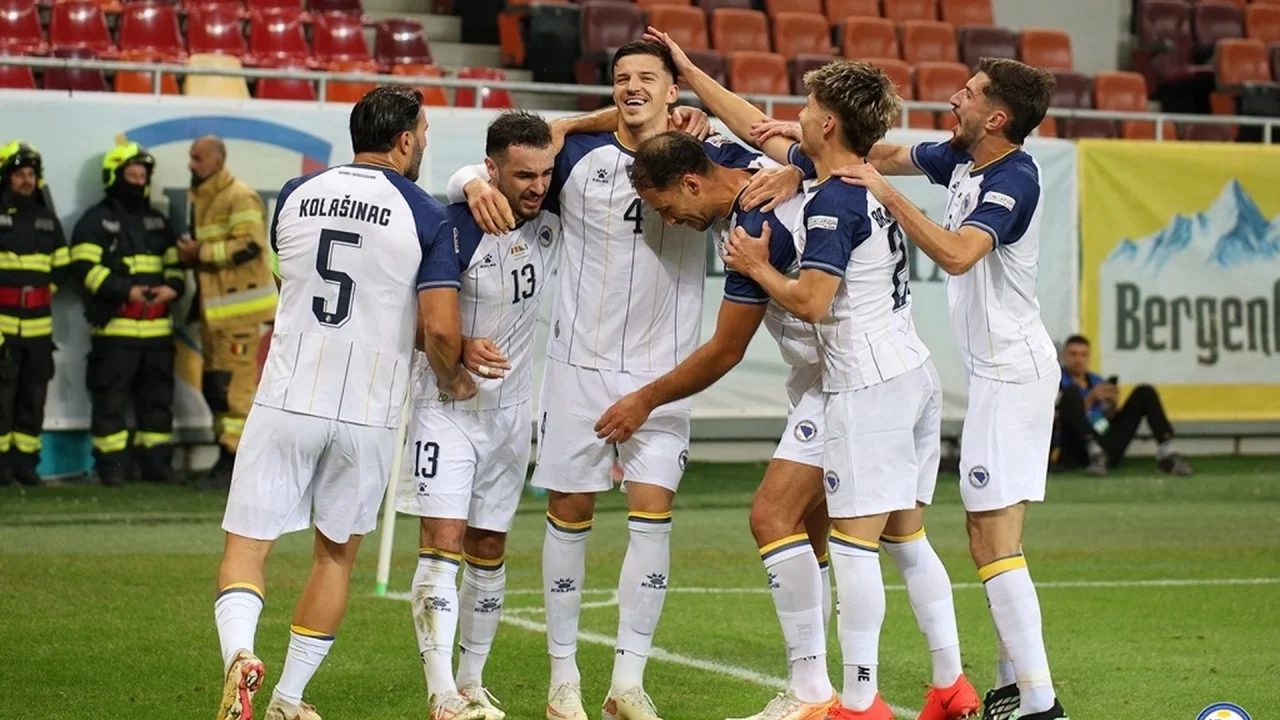
Bosnia and Herzegovina won 4-2 in Bucharest with goals from Armin Gigović, Tarik Muharemović, Haris Tabaković and Nidal Čelik Mahmić. Romania answered through Daniel Bîrligea and Alexandru Cicâldău but could not stop the visitors from producing the next decisive action. Six goals from six scorers made the match look chaotic, yet Bosnia’s advantage came from maintaining several attacking routes after Romania adjusted to the first one.
Bosnia attacked with support close to the first receiver
The visitors were most effective when the player receiving between Romania’s lines had an immediate option. A nearby runner allowed the first touch to move the attack rather than merely protect the ball. That support also helped Bosnia recover possession after a blocked pass, keeping Romania near its own penalty area and increasing the number of second attacks.
Gigović’s contribution reflected the value of midfielders reaching advanced spaces without leaving the build-up disconnected. When he moved forward, another player protected the centre and the wide option remained available. Romania therefore could not press the ball with complete confidence. Closing one lane risked opening another to a runner arriving from deeper.
Romania’s two goals kept forcing a new answer
Bîrligea and Cicâldău ensured that Bosnia never had a comfortable period in which the lead could be managed passively. Romania attacked with greater conviction after falling behind and found moments around the penalty area. Those replies changed the emotional state of the game, bringing the crowd back and asking whether the visitors could continue playing forward under pressure.
The hosts’ difficulty was sustaining that pressure after scoring. Bosnia restarted with purpose, survived the immediate phase and rebuilt attacks instead of spending the next ten minutes defending the box. Romania needed more recoveries in the visiting half to create a continuous wave. Without them, each goal became a strong isolated moment rather than the foundation of a comeback.
Muharemović and Tabaković gave the attack different reference points
A defender and a striker appearing on the scoresheet underline the variety of Bosnia’s threat. Muharemović could influence a set piece or second phase, while Tabaković offered a direct penalty-area target. Romania had to defend both the organised restart and the moving sequence. Concentrating on the main forward did not remove the danger from deeper or taller runners.
Set plays are particularly important away from home because they create a controlled attacking moment after periods without the ball. The delivery, blockers and rebound positions must be prepared as carefully as the first header. Bosnia’s willingness to attack those phases with numbers gave Romania another problem while preserving enough balance against a counter.
| Team | Scorers |
|---|---|
| Romania | Daniel Bîrligea, Alexandru Cicâldău |
| Bosnia and Herzegovina | Armin Gigović, Tarik Muharemović, Haris Tabaković, Nidal Čelik Mahmić |
| Final score | Romania 2-4 Bosnia and Herzegovina |
Mahmić’s goal showed that the bench could preserve intensity
Late in an open match, a substitute can either protect tired teammates or exploit the spaces created by fatigue. Mahmić’s contribution helped Bosnia do the latter. Fresh movement stretched a Romanian defence that had already spent the evening tracking several types of run. The goal also prevented the final phase from becoming a desperate attempt to protect a one-goal margin.
Substitutions work best when they continue an existing idea. A new player should know whether to press the first pass, occupy the last defender or carry the ball into an exposed side. Bosnia did not ask fresh legs merely to chase clearances. They remained connected to the attack, which gave the team a route away from its own goal.
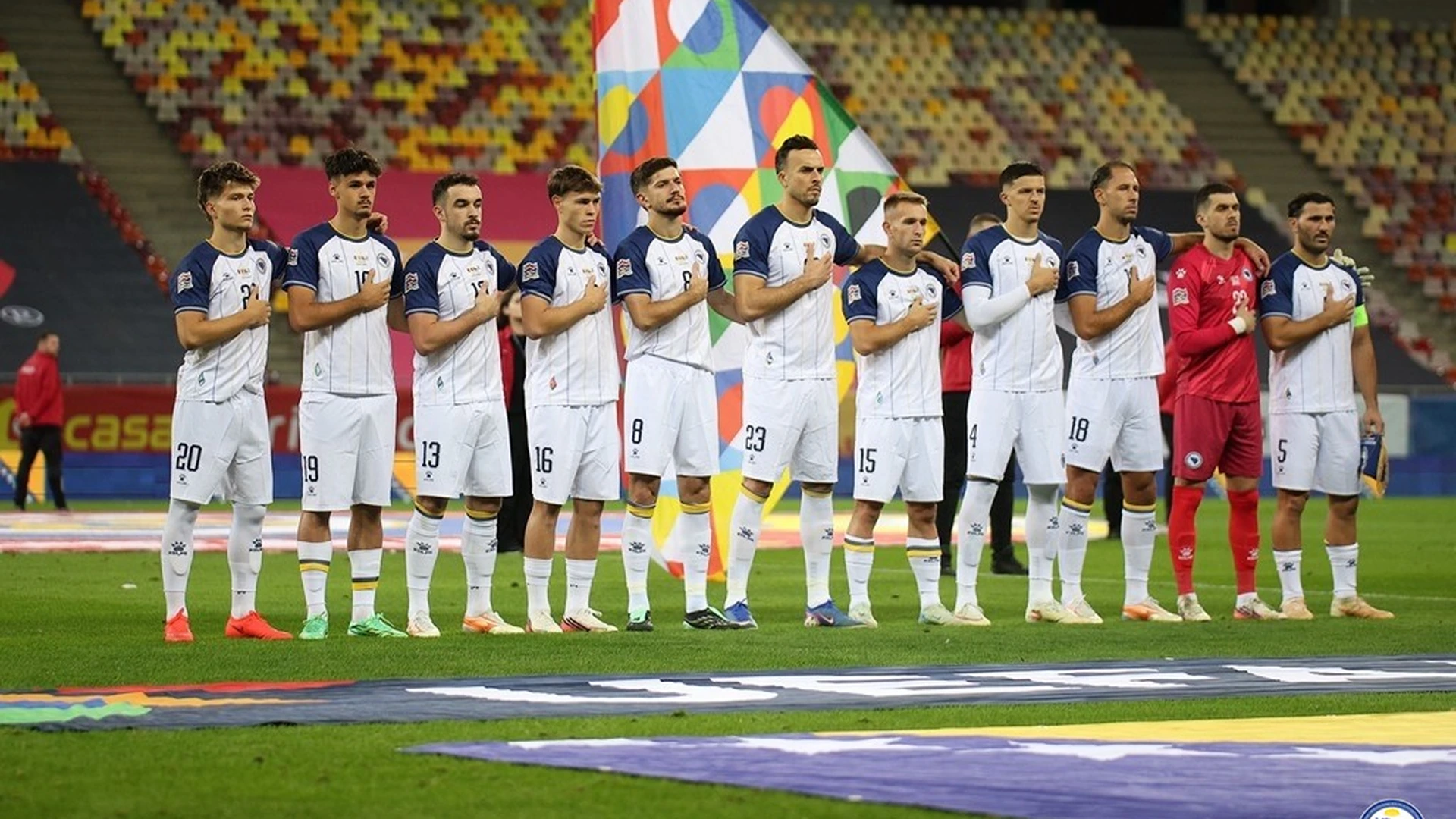
Romania need a better structure after committing numbers forward
The hosts had to increase risk, but risk can still be organised. When both full-backs and a midfielder advance, another player must protect the space around the first clearance. Bosnia repeatedly found room once Romania’s initial attack broke down. That forced retreating defenders to make decisions while facing their own goal, the least comfortable situation for stopping a quick combination.
A more stable rest defence would not reduce Romania’s attacking ambition. It would allow pressure to continue after the first cross. Winning the second ball near the box creates another delivery and keeps Bosnia from selecting an easy outlet. The final score reflected not only chances conceded inside the area but also the space from which those attacks began.
Four scorers made Bosnia harder to control
Bosnia’s greatest advantage was distribution. Romania could not remove one player and expect the attacking problem to disappear. Midfield movement, set-piece presence, a central forward and a fresh substitute all supplied goals. That range makes future opponents prepare for the whole structure rather than one obvious duel.
The 4-2 win also offers a lesson in response. Romania twice showed that the game was alive, but Bosnia produced another organised phase each time. Maintaining that clarity in a six-goal match is valuable. The visitors leave Bucharest with a result built on attacking variety and the ability to restore control after the scoreline became uncertain.
Comments
No comments yet — be the first to share your thoughts.