

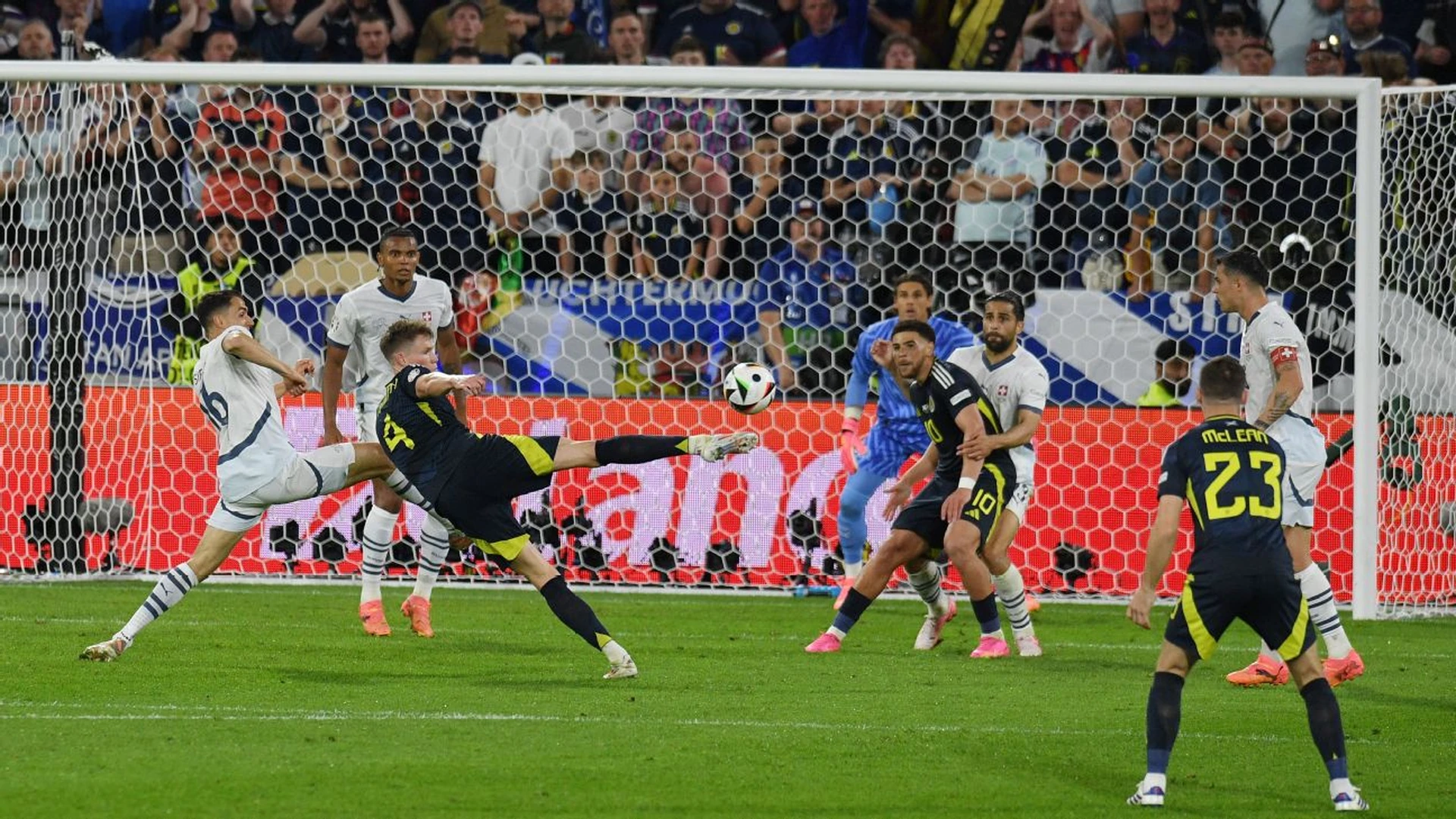
Switzerland have started Group B1 with two 3-0 victories, following their opening success against North Macedonia with another away to Scotland. The hosts entered the match after a goalless draw in Slovenia, but again failed to score. Switzerland’s six unanswered goals create the clearest early separation in the group and place immediate pressure on Scotland’s next attacking plan.
Switzerland carried the same standard into an away match
A strong home opener can be dismissed as favorable conditions until the team reproduces its structure elsewhere. Switzerland’s second 3-0 result shows that the defensive base and attacking support travelled. The distances behind the ball remained close enough to stop Scotland from turning a clearance or interception into an unopposed run.
The away side did not need to copy every pattern from the first fixture. It needed to preserve the relationships: a forward option between lines, width that stretches the block and midfielders positioned to collect the next ball. Those relationships allow attacks to vary without becoming improvised. Three goals then arrive as the product of repeated access, not one reckless surge.
Scotland’s scoreless start points to the final connection
A goalless draw in Slovenia and a home defeat without scoring are different matches, yet they share an outcome. Scotland need to examine what happens immediately before the shot. Reaching the flank is not enough if the penalty area contains only one marked target, and central possession is not enough if every receiver faces away from goal.
The next improvement can be simple: coordinate the first near-post run with a delayed arrival near the penalty spot and protect the edge of the box for a recycled attack. Those three positions give the crosser several decisions and reduce the chance that one clearance ends the move. More players inside does not mean everyone attacks the same line.
Switzerland protected its defense by pressuring the pass
Switzerland’s defenders did not have to win every aerial duel in isolation if the service arrived under pressure. A rushed cross or vertical pass narrows the range of possible outcomes. Midfield pressure therefore belongs in the clean-sheet analysis alongside blocks and saves, because it determines the quality of the action that reaches the back line.
When Scotland recovered possession, Switzerland’s nearest players could delay rather than dive into a tackle. That brief delay allowed the rest of the team to regain shape. The result was a defense that appeared calm because dangerous situations were reduced before they entered the penalty area. Organization made individual decisions easier.
| Group B1 team | First two results | Goals |
|---|---|---|
| Switzerland | 3-0 vs North Macedonia; 3-0 at Scotland | 6-0 |
| Scotland | 0-0 at Slovenia; 0-3 vs Switzerland | 0-3 |
| Slovenia | 0-0 vs Scotland; 2-0 vs North Macedonia | 2-0 |
| North Macedonia | 0-3 at Switzerland; 0-2 at Slovenia | 0-5 |
Scotland needed longer periods of pressure
Home energy grows when attacks continue after the first clearance. Recovering the loose ball, switching the angle and returning quickly can keep the opponent facing its own goal. If the ball instead travels all the way back without purpose, the crowd’s urgency can push the next pass forward before the structure is ready.
The solution is not permanent speed. Scotland need a visible rhythm: circulate until a defender steps, attack the space he leaves, and keep two players ready for the second phase. That pattern creates pressure the crowd can recognize while protecting the team from Switzerland’s counterattack. Urgency should sharpen the decision, not replace it.
Six goals without reply improve more than confidence
Goal difference can separate teams in a short group, and Switzerland have already built a strong margin. It also changes how opponents approach them. A team that knows Switzerland can score several times may defend more cautiously, which creates additional possession for the group leader. Early results begin influencing future tactical choices.
Switzerland must avoid treating the margin as evidence that every attack is efficient. Video review should still identify possessions that ended in low-percentage shots or exposed the midfield. The best time to correct those moments is after a win, when the principles are working and changes can be made without panic.
The return fixtures will test adaptation
Scotland and North Macedonia have now both experienced Switzerland’s current structure. In the next meeting, they can prepare a different pressing height, block the first midfield receiver or force buildup toward a less comfortable side. Switzerland will need an alternate exit rather than assuming the original route stays open.
For Scotland, the next match is about producing a first goal without losing defensive balance. One early finish could change the emotional weight of the campaign, but chasing it with too many players ahead of the ball would repeat the conditions Switzerland exploited. Controlled occupation of the box is a better target than a vague demand to be more attacking.


Comments
No comments yet — be the first to share your thoughts.