












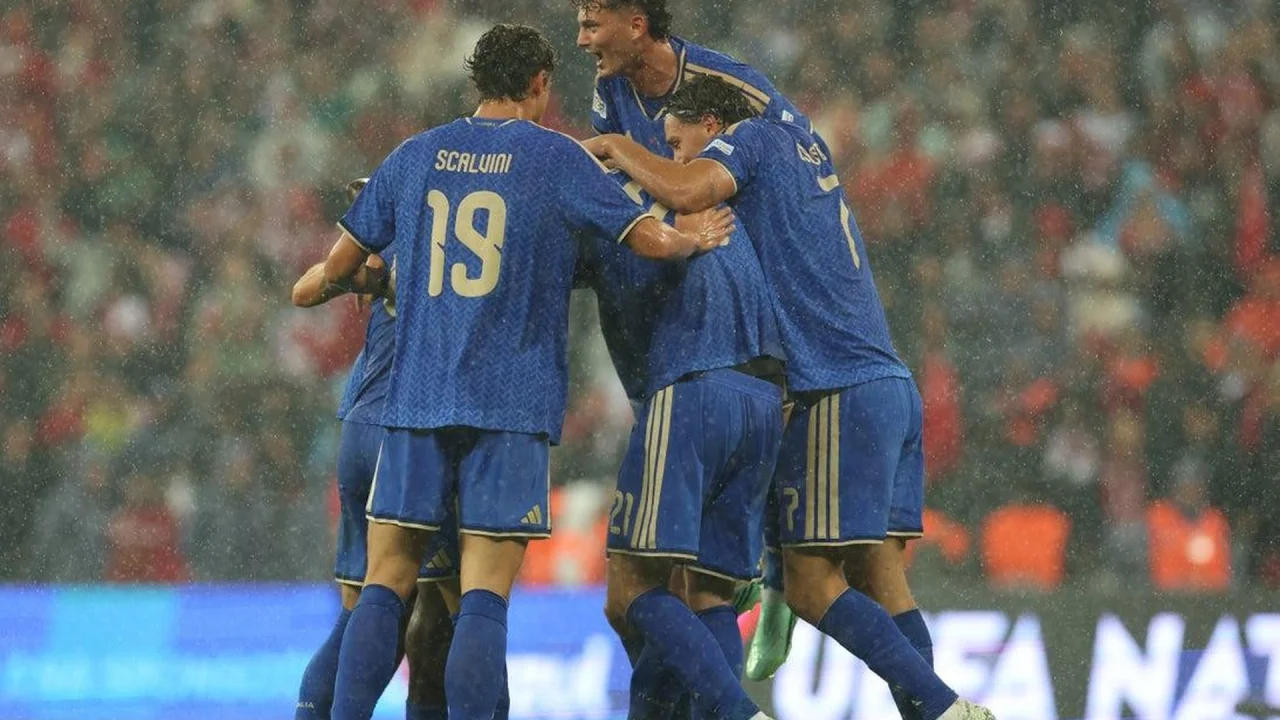
Italy beat Türkiye 4-1 after turning controlled possession and stronger penalty-area timing into a decisive away result. Alessandro Bastoni opened the scoring, Davide Frattesi added the second and Michael Kayode marked his senior international debut with a goal. Barış Alper Yılmaz briefly reduced the deficit before Pio Esposito completed the scoring with a header. The score grew because Italy remained direct after gaining control instead of merely protecting their advantage.
Bastoni’s opener rewarded Italy’s patient build-up
Italy did not force the first forward pass against Türkiye’s pressure. The defenders circulated until a midfielder could receive with a useful body position, then advanced together. Bastoni’s contribution at the other end underlined how a centre-back can influence an attack after helping begin it. The opening goal gave the visitors proof that their controlled build-up could lead to a concrete penalty-area action.
Türkiye tried to make the match emotional and quick, particularly when the ball entered wide areas. Italy’s answer was not to slow every moment. They slowed the unstable moments and accelerated once the first pressing line had been removed. That prevented unnecessary turnovers near their own goal while still placing enough players around the box to attack a second ball.
Frattesi’s movement exposed the space behind the first duel
Frattesi remains difficult to track because he does not wait between the lines for the entire move. He arrives from midfield after defenders have already focused on the forward and wide player. His goal reflected that timing. The run attacked a zone that looked protected at the start of the sequence but opened when Türkiye shifted toward the ball.
This kind of movement also changes the value of an ordinary cross or cutback. The first attacker does not need to beat every defender if a midfielder is entering the area at the correct speed. Türkiye’s central players often had to choose between following Frattesi and protecting the edge of the box. Italy repeatedly used that uncertainty to keep attacks alive after the first action.
Türkiye’s reply tested whether Italy would retreat
Barış Alper Yılmaz gave the hosts a route back into the contest and increased the volume inside the stadium. At that point, the important question was whether Italy would abandon the principles that had created the lead. Dropping too early would have invited crosses and second balls; chasing an immediate answer without structure would have offered Türkiye a transition.
Italy continued to use possession as a way to move the hosts rather than simply waste time. The visitors accepted safer passes when pressure was intense, then looked forward again once the shape settled. That response denied Türkiye the extended wave of attacks required to turn one goal into a complete change of momentum.
| Scoring sequence | Player |
|---|---|
| Italy opener | Alessandro Bastoni |
| Italy second | Davide Frattesi |
| Türkiye goal | Barış Alper Yılmaz |
| Italy debut scorer | Michael Kayode |
| Final goal | Pio Esposito |
Kayode’s debut goal added width at the right moment
A full-back can arrive unnoticed when a defence narrows around central runners. Kayode used that pattern on his senior debut. His positioning gave Italy an extra player at the far side and forced Türkiye to defend the full width of the area. The goal was personally significant, but tactically it was the result of the whole move occupying defenders elsewhere.
The performance also showed why debutants need a clear role. Kayode was not asked to solve the match through constant improvisation. He could recognise when to support, when to hold the outside lane and when to enter the box. A defined responsibility made the occasion smaller and allowed his athletic qualities to contribute to a functioning team.
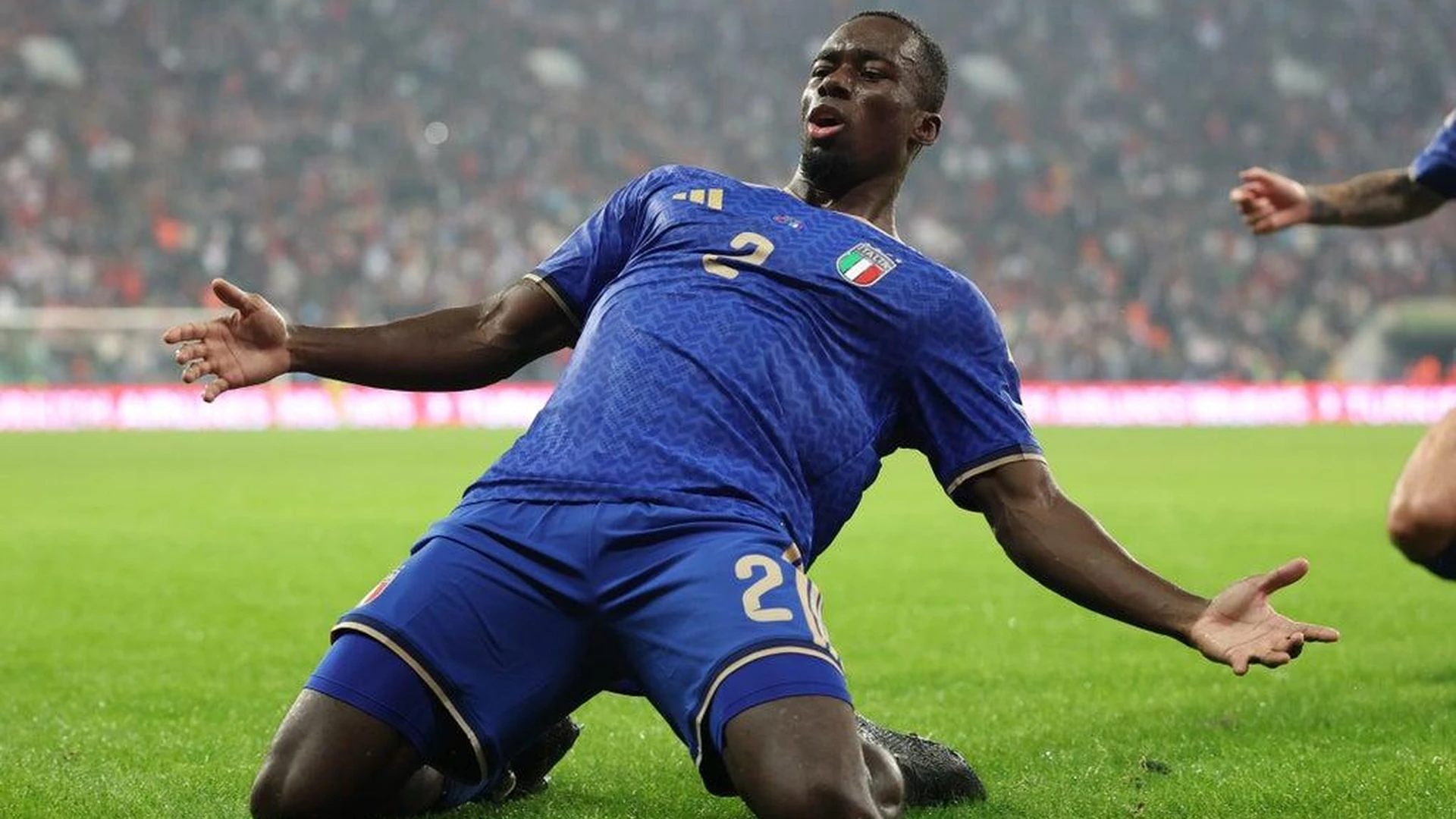
Pio Esposito’s header confirmed Italy’s control of the area
The fourth goal came from a forward attacking the delivery with conviction. Esposito’s header demonstrated the value of having a target who can turn wide service into a direct attempt. Earlier movement had made Türkiye defend cutbacks and midfield arrivals; the striker then punished the space above and between the centre-backs.
A 4-1 score can suggest that every Italian attack was easy, but the margin was built by varied occupation. Bastoni contributed, Frattesi arrived from midfield, Kayode supplied width and Esposito finished as a central striker. Türkiye could not apply one marking solution to four different sources of threat, especially once the match stretched.
Italy’s result came from repeating principles, not repeating attacks
The visitors used the same broad ideas throughout: secure the first pass, advance with support and fill several penalty-area lanes. The actual finish changed each time. That is a healthier form of consistency than attempting the same crossing pattern until it works. Players understood the spacing while retaining freedom to recognise the next opening.
Türkiye can identify the moments before each goal rather than treating the score as one defensive failure. Pressure on the ball, tracking from midfield and far-post protection broke down at different times. Correcting those connections will matter more than simply adding another defender. Italy leave with a strong away victory and evidence that several generations can contribute within one structure.

Comments
No comments yet — be the first to share your thoughts.